


Prêt à lancer votre activité au Maroc ?
Legalstation vous accompagne de A à Z : SARL, SAS, SA ou auto-entrepreneur. Statuts, immatriculation RC et suivi expert.
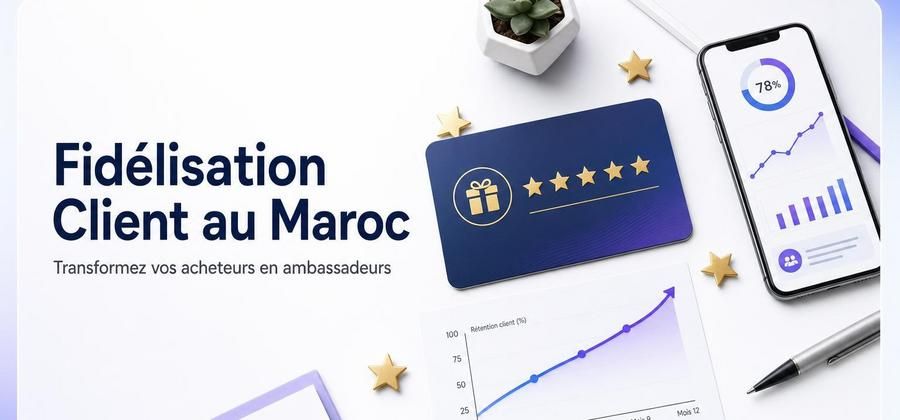
You've successfully attracted your first clients — but how do you bring them back? How do you turn a one-time transaction into a lasting relationship? Is your loyalty programme truly effective, or merely decorative? And above all, how do you get your satisfied customers to spread the word about your business?
In an increasingly competitive Moroccan market, acquiring a new customer costs on average five to seven times more than retaining an existing one. Yet many businesses channel the bulk of their marketing efforts into acquisition, while overlooking retention. This is a costly strategic mistake — a loyal customer buys more, returns more often, and spontaneously recommends your business to those around them.
In this comprehensive guide, LegalStation.ma presents a structured approach to building a genuine customer retention strategy tailored to the realities of the Moroccan market — whether you run a startup, a micro-enterprise, an SME, or operate as an independent service provider.
Why Customer Retention Is an Underutilised Growth Driver in Morocco
Retention is not simply a reward offered after a purchase. It is a holistic strategy built on the quality of the customer experience at every touchpoint: before, during, and after the sale.
In Morocco, several factors make this approach even more critical:
- Trust plays a central rolein purchasing decisions. A customer who trusts you will return — and more importantly, will recommend you within their personal network.
- Word of mouth remains extremely powerful, particularly in retail, artisan crafts, business services, and hospitality.
- Price sensitivity is real, yet a loyal customer is often willing to pay a little more for an experience they know and value.
- Growing digitalisationprovides new, accessible tools — even for small businesses — to automate and personalise the customer relationship.
The Fundamentals of an Effective Retention Strategy
1. Know Your Customers in Depth
Every retention strategy begins with a thorough understanding of your customer base. Who buys what, how frequently, and at what average spend? What are their preferred communication channels?
Without this knowledge, you risk sending the right message at the wrong time — or worse, reaching out to a customer who has been inactive for two years as though they were still engaged. A simple, well-maintained customer file, even on Excel to begin with, is an essential starting point.
If you use a sales management tool or CRM, leverage it to segment your customers into straightforward categories: new customers, regular customers, at-risk customers, and top customers.
2. Deliver a Consistent and Memorable Customer Experience
Loyalty cannot be bought — it must be built. It starts with the perceived quality of your product or service, but also encompasses every detail surrounding the purchase: the ease of ordering, response speed, clarity of invoicing, and after-sales follow-up.
A memorable experience often comes down to an unexpected touch: a personalised thank-you message, a delivery that arrives ahead of schedule, or a spontaneous gesture of goodwill following a significant purchase.
3. Implement a Loyalty Programme Suited to Your Business
The loyalty programme is the best-known retention tool, but it must be designed around your specific business model. Several formats exist:
- A points system: customers accumulate points with each purchase and redeem them for discounts or gifts. Easy to understand and well-suited to retail.
- An advantages card: after a set number of purchases, the customer automatically receives a benefit (e.g., every tenth coffee is complimentary). Simple to implement even without digital tools.
- A VIP or subscription programme: customers pay a monthly or annual subscription to access preferential rates or exclusive services. Particularly effective for service providers.
- Non-financial rewards: priority access, event invitations, or privileged status. Especially effective for recognising valued customers without eroding your margins.
Communication and Retention: Staying Present Without Being Intrusive
One of the most common challenges for Moroccan entrepreneurs is maintaining regular communication with customers without coming across as pushy. Here are the best practices to adopt.
Retention Email Marketing
Email marketing remains one of the most effective channels for maintaining a connection with your customers — provided you avoid spamming. A well-crafted monthly newsletter featuring useful content, exclusive offers reserved for existing customers, and company news delivers measurable results.
Personalise as much as possible: include the customer's first name in the subject line, offer recommendations based on previous purchases, and send a message on their birthday or the anniversary of their first order.
WhatsApp Business as a Customer Relationship Tool
In Morocco, WhatsApp is a daily communication channel for the vast majority of the population. WhatsApp Business allows you to send automated messages, create a product catalogue, manage enquiries, and re-engage customers in a natural, conversational way.
Use it judiciously: favour personalised messages over mass broadcasts, and always ensure you have obtained your contacts' consent before reaching out to them.
Social Media for Nurturing the Customer Relationship
Do your customers follow you on Instagram, Facebook, or TikTok? This is a retention opportunity not to be overlooked. Respond consistently to comments, showcase customer testimonials, and create content that resonates with your audience and celebrates your community.
A customer who regularly engages with your content naturally strengthens their attachment to your brand.
Turning Your Customers into Brand Ambassadors: The Power of Structured Word of Mouth
A satisfied customer can become your most effective salesperson — provided you give them the tools and the motivation to act. This is what referral marketing is all about.
Launching a Referral Programme
Encourage your customers to recommend your business by offering them an attractive incentive: a discount on their next purchase, a complimentary month of subscription, or a gift. Referral programmes are particularly effective in the services, training, e-commerce, and subscription sectors.
The mechanics are straightforward: the customer receives a personalised code or link, shares it with their network, and when a new customer signs up or makes a purchase via that link, both parties receive a benefit.
Encouraging Customer Reviews and Testimonials
Online reviews directly influence purchasing decisions. Encourage satisfied customers to leave a review on Google My Business, your Facebook page, or your website. A simple follow-up message sent after a delivery or completed service is often enough.
Video testimonials or client case studies are even more powerful: they humanise your offering and reassure prospective customers.
LegalStation Tip:Before launching a referral programme or collecting customer data for your CRM, ensure that your practices comply with Morocco's personal data protection regulations. Law No. 09-08 governs the processing of personal data. Always obtain explicit consent from your customers before contacting them by email or WhatsApp, and clearly communicate how their data will be used. If in doubt, consult a professional to ensure your practices are fully compliant.
Measuring the Effectiveness of Your Retention Strategy
What cannot be measured cannot be improved. Here are the key metrics to monitor on a regular basis:
- Customer retention rate: the percentage of customers who made at least one additional purchase during a given period.
- Churn rate: the percentage of customers lost during a given period. Monitor this closely to identify the root causes of attrition.
- Average basket size: is a loyal customer spending more over time?
- Purchase frequency: are your customers returning more often since the introduction of your programme?
- Net Promoter Score (NPS): a single question posed to your customers — "On a scale of 0 to 10, how likely are you to recommend our business?" — which provides a clear picture of their satisfaction level and propensity to refer others.
Mistakes to Avoid in Your Retention Strategy
- Promising more than you can deliver: an overly generous loyalty programme that you cannot honour will damage your credibility.
- Ignoring complaints: a dissatisfied customer who receives a prompt, satisfactory response is often more loyal than one who never experienced a problem.
- Treating all customers the same: your best customers deserve special attention. Differentiating your efforts according to customer value is an essential practice.
- Neglecting after-sales follow-up: post-purchase follow-up is one of the most critical moments in building lasting loyalty.
- Launching a programme without communicating it: a loyalty programme that your customers don't know about has no impact. Promote it at every customer touchpoint.
Frequently Asked Questions
Do I need specialist software to manage customer retention?
Not necessarily. A small business can start with a well-organised customer file and free tools such as Mailchimp for email marketing or WhatsApp Business for direct communication. CRM tools like HubSpot offer free versions suitable for SMEs. The important thing is to start — even simply — rather than waiting for the perfect solution.
Is a points programme suitable for all businesses?
No. A points system works well for retail and e-commerce. For B2B service providers, consulting firms, or agencies, different forms of loyalty are more appropriate: preferential pricing, priority access, exclusive content, or enhanced support. Choose a format that aligns with your business model.
How do you re-engage inactive customers?
Start by identifying customers who have not made a purchase in six months or more. Send them a personalised message with an attractive comeback offer: a discount, an exclusive benefit, or simply a message expressing that their absence has been noticed. Avoid generic messages that feel like mass broadcasts.
Can word of mouth really be structured?
Yes. A well-designed referral programme transforms spontaneous word of mouth into an actionable marketing lever. By offering a clear incentive to satisfied customers to recommend your business, you create a predictable mechanism for acquiring new customers at a lower cost.
What is the difference between customer satisfaction and customer loyalty?
Satisfaction is a necessary but insufficient condition for loyalty. A customer may be satisfied with a purchase and never return — simply because they found a competing offer, or because you failed to maintain the relationship. Loyalty is an active, ongoing effort that goes well beyond one-time satisfaction.
Checklist
- Customer Knowledgeul>li>Create or update your customer file with essential information
- Segment your customers: new, regular, inactive, VIP
- Identify your best customers and their average spend
- Map all customer touchpoints (before, during, and after the purchase)
- Identify friction points and address them as a priority
- Implement a systematic follow-up process after every sale or service delivery
- Choose the programme format best suited to your business
- Define clear, simple, and attractive rules
- Communicate the programme to all existing customers
- Integrate it into all communication materials (website, social media, invoices)
- Set up a monthly or bi-monthly newsletter
- Use WhatsApp Business for personalised follow-ups and re-engagement
- Respond consistently to online comments and reviews
- Launch a referral programme with a clear incentive
- Ask satisfied customers to leave a Google review
- Collect testimonials and showcase them across your communication channels
- Track your retention rate and churn rate on a monthly basis
- Send an NPS survey to your customer base at least once a year
- Analyse the results and adjust your strategy accordingly
- Verify that customer data collection complies with Law No. 09-08
- Obtain explicit consent before any commercial outreach
Conclusion
Customer retention is not a luxury reserved for large corporations. It is a strategy accessible to any business, from the very first client, provided you dedicate consistent, structured attention to it. By combining a high-quality customer experience, personalised communication, a well-adapted loyalty programme, and rigorous performance tracking, you progressively build a customer asset that becomes one of the most valuable foundations of your business.
If you would like to go further in structuring your operations, managing your legal obligations, or growing your business in Morocco, LegalStation.ma provides practical resources and available experts to support you at every stage of your development.
Prêt à lancer votre activité au Maroc ?
Legalstation vous accompagne de A à Z : SARL, SAS, SA ou auto-entrepreneur. Statuts, immatriculation RC et suivi expert.
Commentaires
Soyez le premier à commenter cet article.