


Employeur au Maroc ? Votre société doit être immatriculée
Pour déclarer un salarié à la CNSS, vous devez disposer d'une entreprise enregistrée (RC). Legalstation crée votre SARL, SAS ou SA 100% en ligne.
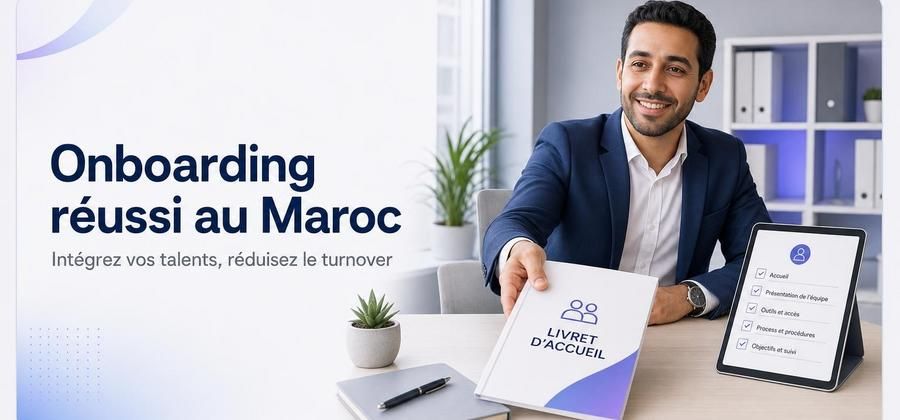
A new employee has just accepted your offer. What happens next? How do you get them up to speed quickly without overwhelming them with information? What do they need to know on their very first day? What obligations does the employer have during the integration process? And above all, how do you prevent them from leaving within the first three months?
These are questions that many Moroccan companies tend to underestimate. They recruit, sign the contract, and then leave the employee to fend for themselves. Yet the integration period — known asonboarding— is one of the most critical phases in an employee's lifecycle. A failed onboarding means a wasted recruitment investment, a destabilised team, and accelerating turnover.
In this practical guide, LegalStation.ma explains how to build a solid onboarding process, tailored to the realities of Moroccan businesses, and how to turn every new hire into an engaged and productive team member.
Why Onboarding Is a Strategic Priority for Moroccan SMEs
Onboarding is not simply a welcome day or the handing over of a badge. It is a structured process that begins before the employee's first day and continues throughout the probationary period — and often beyond.
In the Moroccan context, SMEs and micro-enterprises face a dual challenge: limited HR resources, and a labour market where skilled talent is increasingly mobile. A poorly welcomed employee will not hesitate to leave quickly, often before the end of their probationary period.
The consequences are immediate: replacement costs, loss of productivity, demotivation among existing team members, and a damaged employer brand. Investing in quality onboarding is therefore an economically sound decision — not a luxury reserved for large organisations.
Key Steps to a Successful Onboarding in Morocco
1. Pre-Onboarding: Preparing for Arrival Before Day One
Integration begins even before the employee walks through the company's door. From the moment the contract is signed, several actions can be taken to establish a positive first connection.
- Send a personalised welcome message to the new team member.
- Have their workstation, IT access, and tools ready from day one.
- Inform the team of their arrival and their role within the organisation.
- Share practical information: working hours, office address, parking, dress code, and the name of their designated point of contact.
- Prepare the necessary administrative documents: signed contract, CNSS registration, job description, and internal regulations.
This level of care before arrival sends a clear signal: the company is organised, professional, and genuinely attentive to its people.
2. The First Day: Setting the Stage for a Memorable Welcome
The first day cannot be undone. It shapes a lasting impression. Avoid leaving your new employee waiting in a hallway or sitting in front of a computer with no guidance.
- Welcome them in person or assign a clearly identified point of contact.
- Introduce them to the entire team, ideally in a relaxed and convivial setting.
- Give them a tour of the premises and walk them through the company's culture and habits.
- Provide a welcome booklet or a concise document covering all essential information.
- Set aside time to address their initial questions.
A warm and structured welcome significantly reduces first-day anxiety and fosters immediate engagement.
3. The First Few Weeks: Supporting the Learning Curve
Operational integration takes time. The first few weeks should allow the employee to understand their scope of responsibilities, their tasks, the tools in use, and their manager's expectations.
- Schedule regular one-to-one check-ins between the employee and their direct manager.
- Set clear, progressive objectives for the probationary period.
- Arrange internal or external training where required.
- Designate a mentor or a buddy to ease integration within the team.
- Create opportunities for cross-departmental interaction across the business.
4. Monitoring Throughout the Probationary Period
The probationary period works both ways: the employer assesses the employee, but the employee also assesses the company. Active monitoring during this phase is essential to identify any adaptation difficulties before they lead to a separation.
- Organise a mid-probation review.
- Provide constructive and consistent feedback.
- Identify any roadblocks and offer concrete solutions.
- Ensure the employee has everything they need to succeed.
This monitoring is not an administrative burden — it is a directly measurable retention tool.
The Employer's Legal Obligations When Integrating a New Employee
Beyond best practices, Moroccan employers have specific legal obligations to fulfil from the moment a new employee is hired, governed primarily by theMoroccan Labour Code.
- CNSS Registration: The employee must be registered with the Caisse Nationale de Sécurité Sociale from their very first working day.
- Employment Contract: A written contract is required for fixed-term agreements, or whenever the nature of the working relationship demands it. It must include all essential elements: job title, remuneration, and the duration of the probationary period.
- Provision of Internal Regulations: Where a company has internal regulations in place, these must be brought to the employee's attention.
- Compliance with the Legal Probationary Period: The duration of the probationary period varies by employee category and must be observed within the timeframes set by law.
- Pre-Employment Medical Examination: Where applicable, a medical examination must be carried out at the time of hiring.
Failure to comply with these obligations exposes the employer to significant legal risk, particularly in the event of a subsequent dispute.
LegalStation Advice:Never delay the CNSS registration of your new employee, even if they are still in their probationary period. Should a workplace accident occur prior to registration, your liability as an employer would be directly engaged. Make it a standard practice to complete the registration on the very first day of employment. To secure your HR practices and employment contracts from the outset, LegalStation.ma provides templates and tailored support designed for Moroccan SMEs.
The Most Common Onboarding Mistakes in Morocco
Certain mistakes appear repeatedly across Moroccan companies, regardless of their size. Recognising them is the first step to avoiding them.
- No structured integration plan: Leaving the employee to navigate the role without a roadmap or a dedicated point of contact.
- Information overload on day one: Burying the new hire under procedures and presentations without giving them time to absorb anything.
- No feedback during the probationary period: Waiting until the end of the probationary period to review progress, by which point it is already too late to make meaningful adjustments.
- Lack of involvement from the direct manager: Delegating the entire integration process to HR without the line manager playing an active role.
- Overlooking the human dimension: Focusing solely on technical aspects while forgetting that employees need to feel genuinely welcomed and valued.
- Failing to prepare tools and access in advance: An unconfigured workstation or missing system access on the first day sends a strong message of disorganisation.
Onboarding and Employer Brand: A Direct Connection
In Morocco, the concept of employer branding is gaining rapid traction, driven in part by the growth of employee review platforms and professional networks. A poorly integrated employee who leaves after a few weeks will not remain silent.
Conversely, a successful onboarding process turns your new hires into your company's first ambassadors. They speak positively about their experience within their networks, make future recruitment easier, and actively contribute to the company culture you are building.
For Moroccan SMEs operating in competitive sectors — technology, finance, consulting, specialised industry — delivering a strong onboarding experience has become a genuine differentiating advantage over larger organisations.
Frequently Asked Questions
Is onboarding a legal requirement in Morocco?
There is no specific legal text in Morocco mandating a formalised onboarding process as such. However, certain legal obligations do govern the hiring process: CNSS registration, provision of the employment contract, and communication of internal regulations. The structuring of an integration process falls under HR best practices, but it has a direct impact on the employer's legal security.
How long should an effective onboarding last?
There is no universal timeframe, but HR professionals generally agree that effective onboarding should last at least as long as the probationary period — ranging from several weeks to several months depending on the role. The first 90 days are widely regarded as the most critical period for employee retention.
What should be done if an employee wants to leave during onboarding?
If an employee expresses doubts or a desire to leave during the integration period, it is essential to arrange an individual meeting promptly to understand the underlying reasons. In some cases, an adaptation issue can be resolved quickly with the right support. If a separation becomes inevitable, it must be handled in full compliance with the legal framework set out in the Labour Code, particularly regarding notice requirements during the probationary period.
Is a welcome booklet essential?
A welcome booklet is not a legal requirement in Morocco, but it is an extremely valuable tool. It centralises practical information, company values, the organisational chart, and internal procedures. It reduces repetitive questions and gives the employee a clear, structured sense of welcome from their very first day.
Can onboarding be conducted remotely for a teleworking employee?
Yes — and in fact, it is essential given the growth of remote working in Morocco. Remote onboarding requires even greater attention: regular video calls, shared documentation, a readily accessible point of contact, and collaborative tools available from day one. Isolation is the primary risk to anticipate and mitigate.
Checklist
- Before arrival:
- Prepare and sign the employment contract
- Complete CNSS registration before or on the first day of employment
- Configure the workstation and set up IT access
- Inform the team of the new employee's arrival
- Send a welcome message with all relevant practical information
- Prepare the welcome booklet or onboarding document
- On the first day:
- Welcome the employee in person or designate a named point of contact
- Introduce the team and give a tour of the premises
- Provide the internal regulations and all mandatory HR documents
- Explain the role, scope of responsibilities, and expectations
- Schedule the first check-ins with the direct manager
- First few weeks:
- Define progressive objectives for the probationary period
- Arrange internal or external training as needed
- Assign a mentor or buddy within the team
- Schedule a mid-probation review
- Gather feedback from the new employee on their integration experience
- End of probationary period:
- Conduct a comprehensive end-of-probation review
- Confirm or conclude the working relationship within the legally required timeframes
- Document key strengths and development areas identified during the period
Conclusion
Onboarding is far more than an administrative formality. It is the first tangible investment you make in your relationship with a new team member. A successful integration reduces turnover, accelerates the development of skills, strengthens team cohesion, and reinforces your reputation as a serious employer. In an increasingly competitive Moroccan labour market, overlooking this stage means taking an unnecessary risk on a recruitment process that has already cost you significant time and resources.
Whether you are a growing micro-enterprise or a structured SME, there are simple, actionable practices you can implement today to meaningfully improve your integration process. LegalStation.ma supports you in structuring your HR practices — from drafting employment contracts to ensuring compliance with your social obligations — so that every recruitment becomes a genuine driver of growth for your business.
Employeur au Maroc ? Votre société doit être immatriculée
Pour déclarer un salarié à la CNSS, vous devez disposer d'une entreprise enregistrée (RC). Legalstation crée votre SARL, SAS ou SA 100% en ligne.
Commentaires
Soyez le premier à commenter cet article.